Background
This is a story about my parents, Cecil and Myrtle Sydenstricker. They are the main characters but there is a contributing cast of grandparents, aunts and uncles. They are no longer living but they were an important part of my life and play a valuable role in this story. I will always admire them for the strength of character they exhibited as they lived through some difficult years. I am in my 89th year now and have been planning to write this narrative for a long time. As I began to put words on paper, memories of those years flooded my mind. It was as if these stories wanted to be a part of this narrative so earnestly that they presented themselves to me at odd hours of the day and even during the night. So their stories have been included.
The Sydenstrickers
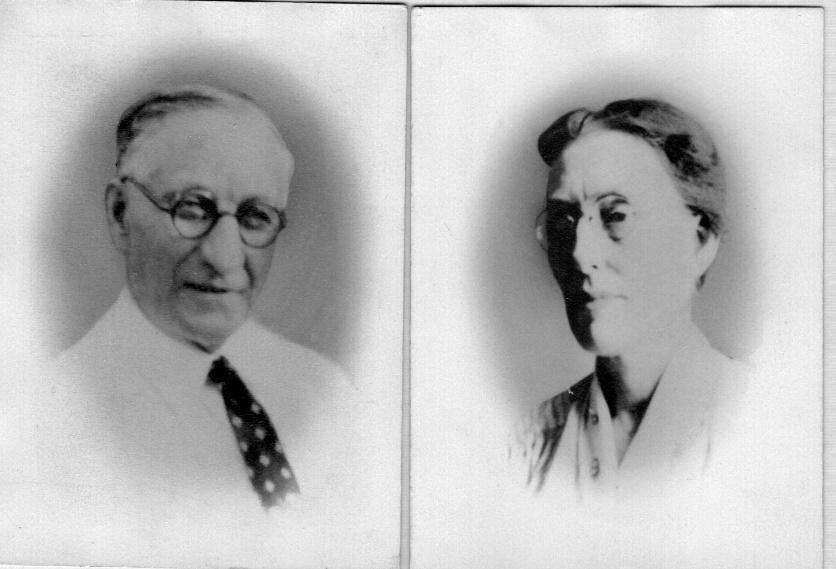
My grandparents, Millard and Rachel Sydenstricker, were blessed with only one child, Cecil. When Cecil was a boy they lived on a farm in Saline County Missouri.
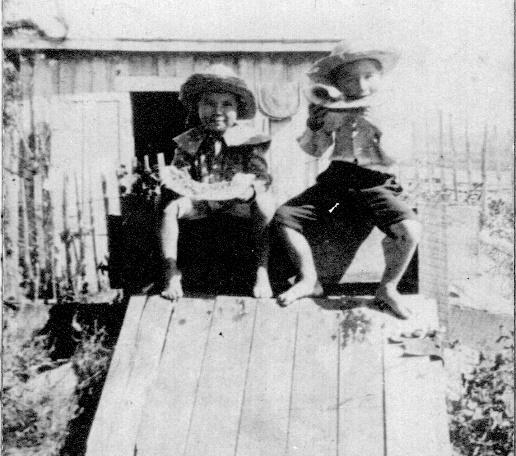
Cecil (on right) sitting on the Cellar Door eating watermelon
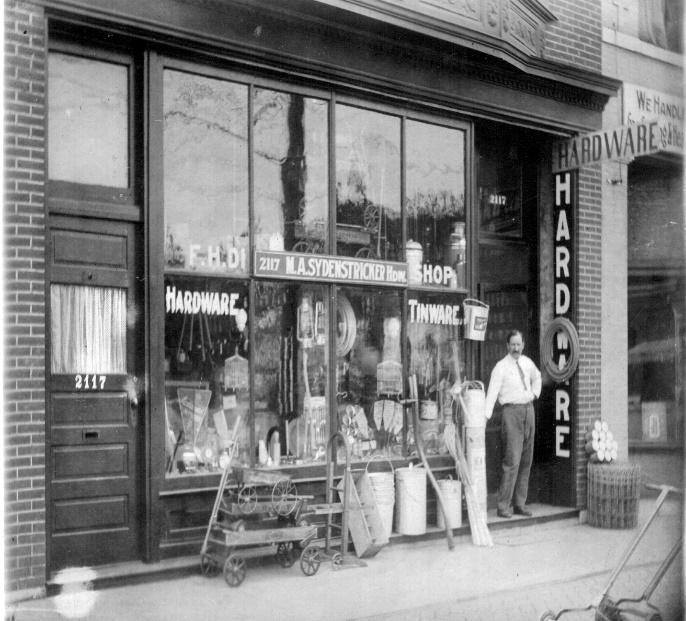
Cecil attended a country school until he was old enough to go to High School, then the family sold their farm and moved to Slater, Missouri. After high school the family moved to Kansas City, Missouri so Cecil could attend college and prepare for a business career. Using the money acquired from selling the house in Slater, Millard started a hardware store in downtown Kansas City, Missouri. Millard is standing at the entrance to his Hardware Store. Picture was taken in 1913.
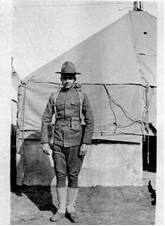
Corporal Cecil Sydenstricker in his WWI Army uniform taken January 1918
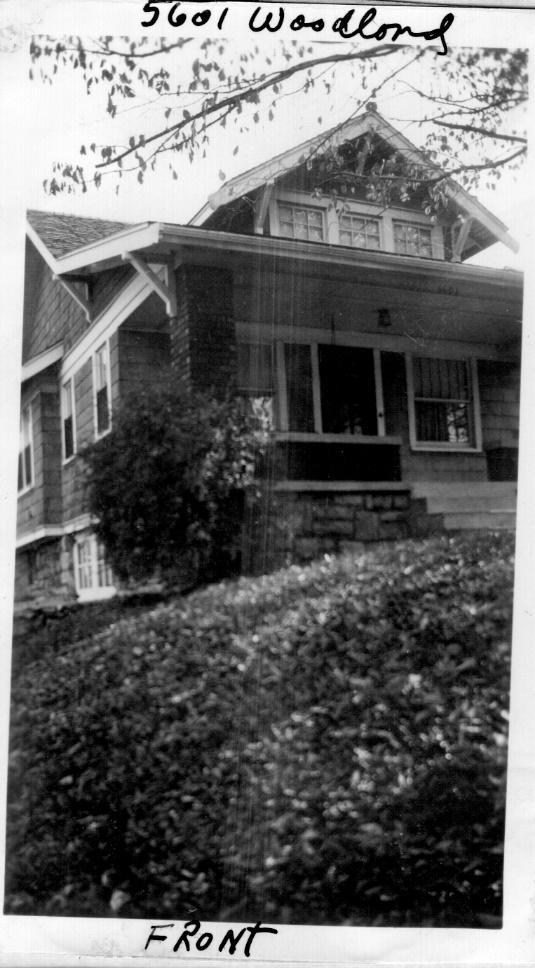
In 1925 they bought a home at 5601 Woodland and lived there the rest of their lives
The Shackelfords Early in their marriage Laura and Addison Shackelford lived in a home at 9th and Askew in Kansas City, Missouri. Addison was an interior decorator and owned a Paint and Wallpaper Store. The business was successful and provided a comfortable income. Over the years they eventually bore seven children.
- First came Gertrude, then
-
- Myrtle, then
-
-
- Raymond, then
-
-
-
-
- Frank, then
-
-
-
-
-
-
- Lola Belle, then
-
-
-
-
-
-
-
-
- Evelyn, and finally,
-
-
-
-
-
-
-
-
-
-
- Robert.
-
-
-
-
-
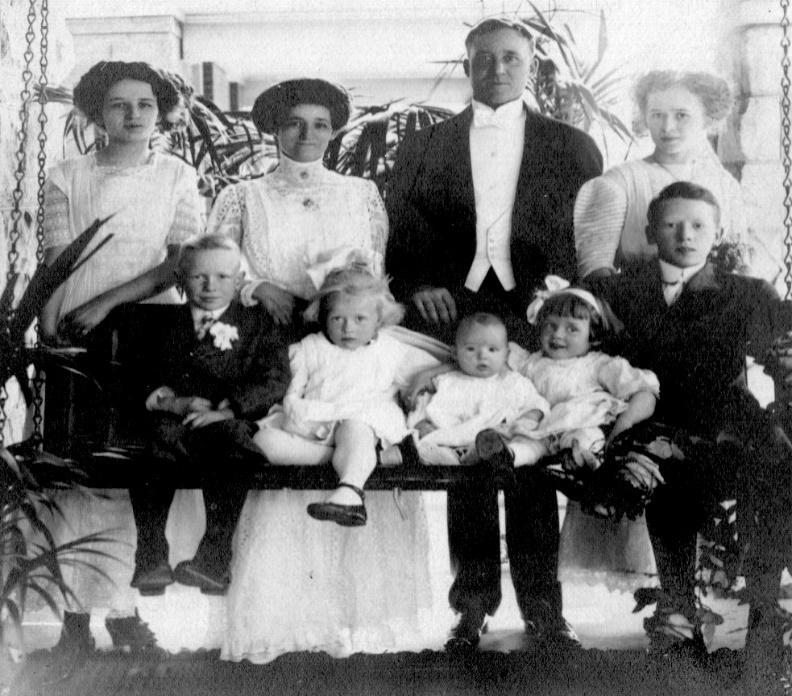
On their twenty-fifth anniversary they posed on the front porch of their home.
Standing left to right: Gertrude, Laura, Addison, and Myrtle
Seated left to right Frank, Lola Belle, Robert, Evelyn and Raymond
A family of nine needed a large automobile so they bought a 1906 Oldsmobile Touring Car.
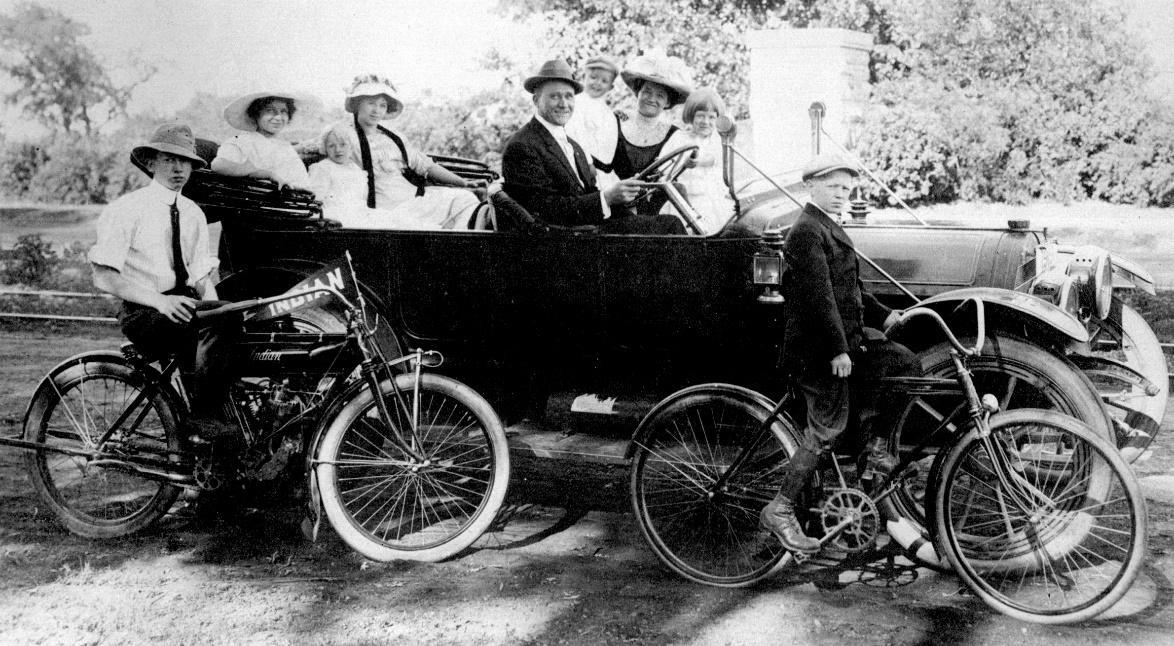
On bicycles Raymond and Frank; In front seat Addison, Robert, Laura and Evelyn In rear seat Gertrude, Lola Belle and Myrtle
Kansas City during the 1920’s was still enjoying a period of prosperity known as the Gilded Age. It was a good time to be an adult starting a career and building a future. The real estate market was active. People were buying homes, cars, and furniture, and everyone anticipated continued success. In those days, Kansas City, Missouri was one of the good places to live. Some important landmarks were already there and some were in the planning stages.
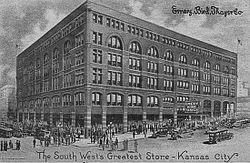
Kansas City’s first department store opened its doors in 1890. This was the Emery Bird Thayer Dry Goods Company, a three story building that covered an entire block. Designers and builders spared no expense. It carried clothing for men and women, household appliances and furniture. It was known for its elegant lunch room, comfortable ladies’ restrooms, and its Christmas Tea Party. Each elevator had an operator who opened or closed the door to allow people to come in or go out. As each floor was reached, the floor number was announced and the operator described the merchandise to be found on that floor. The store closed in 1968 but in 1975 a new restaurant named EBT was built in the suburbs 16 miles south. The famous gilded elevator doors were moved to this new location and many of the other upscale features were incorporated in the new building.
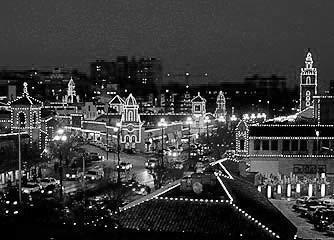
A few years later another landmark became part of the city. This was the Country Club Plaza. In 1922 J.C. Nichols bought a 55-acre site, four miles south of the downtown area. He created buildings on the Plaza with architecture in the style of those in Seville, Spain. Later on as part of this 55 acre site he built areas such as Loose Park, Wornall Road, Ward Parkway, and a residential area called Armour Hills. Now at Christmas the Plaza looks like this.
Chapters
- From the Dark Years to the Golden Years
- Acknowledgements
- Prelude
- Dedication
- Background
- 1. Cecil and Myrtle
- 2. The House that Cecil Built
- 3. Running a Household in the 1920's
- 4. Memories from My Childhood
- 5. The Dark Days and Our Many Moves
- 6. 8920 Euclid Avenue
- 7. 4055 Hyde Park
- 8. Hillcrest Country Day School
- 9. 5110 Park Avenue
- 10. Medical Insurance and Social Security
- 11. 5614 Michigan Avenue
- 12. 311 East 43rd Street and the Pinafore Business
- 13. The War Years
- 14. The Years Following the War
- 15. The Golden Years
- Birth and Death Dates
- About the Author