Chapter 3 - Running a Household in the 1920's
In those days, the family car was the means for the father to get to work and back. The housewife did not need a car to run errands during the day because almost everything she required during the week was delivered to her.
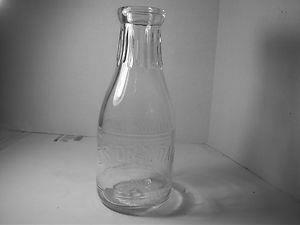
DAIRY: Early each morning a milkman drove his truck down the street and stopped at each house that had milk bottles on the front porch. If milk was needed the housewife set out clean milk bottles. She would tuck a note with her list into one of the bottles. The milkman read the list and filled the order. In those days milk was pasteurized but not homogenized. The top three inches was cream that could be was poured off to use for coffee or desserts.
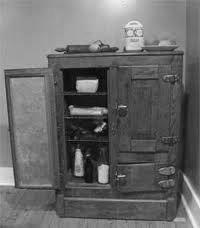 ICE: Electric refrigerators were not even on the market in those days. There was an ice box on the back porch. It had a side compartment that held a 25 or 50 pound cube of ice. The compartment on the left side was for milk, eggs, vegetables and other items that needed to be kept cold. An ice truck would pull up each day; look at a large card placed in the front window of the house to see how much ice to deliver. The position of the card in the window told him the amount of ice that was needed. There were four positions on the card: the 1st position held the number “25”, the second “50”, the third “100” and the fourth “none”. Then with a pair of tongs he would grab the cake of ice, place his load on his shoulder, walk to the back entrance of the house and deposit the ice in the ice box. If a small amount of ice was needed during the day, the housewife would use an “ice pick” to chop off a piece. The block of ice slowly melted as the day went on and water accumulated in a trough below the ice box. This trough would have to be emptied at the end of each day.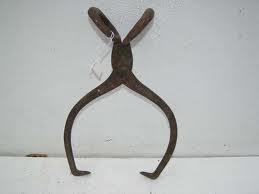
BAKERY GOODS: Every day a Manor Bread Cart would come down the street pulled by a horse. Yes, the horse sometimes left deposits. The delivery man blew a shrill whistle. (It often woke up children who were bedded down for an afternoon nap!) When the housewife came to the door the delivery man would bring a tray to the door filled with freshly baked bread, cakes and breakfast rolls.
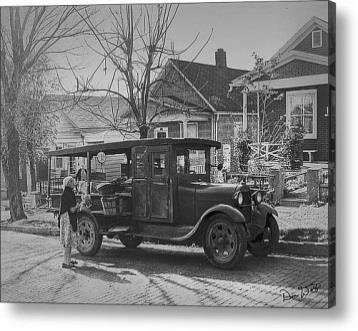 THE HUCKSTER: Once each week a Huckster would drive his truck down the street loaded with fruits and vegetables. As he drove he would shout the names of specials for that day. Hanging on racks along the side of the truck were bunches of bananas, beets, bags of potatoes or oranges.
OTHER FOOD ITEMS: For items such as flour, sugar, butter, or cereal, my Mother used the telephone to call the grocery store and place her order. Later that day a boy on a bicycle with a side cart would arrive with the groceries.
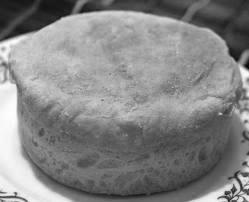
For a special occasion, she would call Wolferman’s Fine Foods. This was the place to buy the very finest foods in the Kansas City area. I have never found an English muffin better than Wolferman’s anywhere.
WASH DAY: The availability of all these necessities makes life sound like a breeze for the housewife, but wait until you hear about washday. This usually occurred on Monday. During the week as soiled clothes accumulated they were dropped down a chute that was located in a hall closet. The clothing would land in a clothes basket placed next to the washing machine. On wash day these clothes were separated by color into loads.
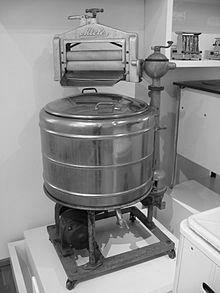
When a load was placed into the washing machine tub, hoses from hot and cold water faucets were used to fill the tub and soap powder was added. An electric switch near the washing machine started an agitator which did the scrubbing. When enough scrubbing had been done the switch was used again to end this process, allowing the soapy water to flow into a drain in the basement floor or into another tub to be used for the next load. Now the process was repeated using clean water to rinse and drain the wash. The machine did not have a spinner to remove the excess water so the clothes were either wrung out by hand or run through a wringer. The wringer, controlled by an electric switch, had two rollers working against each other. By inserting a piece of clothing between the rollers, the rest of the water was squeezed out as the clothing ran through. It then dropped into a clothes basket and waited to be hung on an outdoors clothes line. (One had to be very careful not to catch fingers in the wringer because it could smash a finger.) Hoping for a full day of sunshine, the housewife used clothes pins to fasten the clothes to the line. Later the dried clothes were brought into the house, folded, put away or added to a pile of clothes that had to be starched and ironed. Tuesday was the day for making starch. Clothes were dipped in, wrung out, then hung out to dry. When dried, the starched items were dampened and ironed. Baby diapers had to be washed every day. (Diaper services were not available and disposable diapers had not been invented.)
HEATING THE HOUSE: Stoking the furnace was the job of the man of the house. During the cold winter days my father had to get up very early to stoke the furnace. He had to make sure there were live coals in the furnace before he added coal. If there were no live coals he had to use sticks of wood and ignite the wood with a match to produce a flame. Then he would go to the coal bin with a shovel and carry coal to the furnace. He had to make sure that the coals were burning before he went back upstairs. About an hour or so later, heat would be coming through the vents and the house would become comfortable. On cold mornings when we had to go to school, Daddy would light the gas grate in the living room and hang our clean clothes on the screen in front of the grate. Then they would be warm when we changed from our pajamas into our clothes.
Chapters
- From the Dark Years to the Golden Years
- Acknowledgements
- Prelude
- Dedication
- Background
- 1. Cecil and Myrtle
- 2. The House that Cecil Built
- 3. Running a Household in the 1920's
- 4. Memories from My Childhood
- 5. The Dark Days and Our Many Moves
- 6. 8920 Euclid Avenue
- 7. 4055 Hyde Park
- 8. Hillcrest Country Day School
- 9. 5110 Park Avenue
- 10. Medical Insurance and Social Security
- 11. 5614 Michigan Avenue
- 12. 311 East 43rd Street and the Pinafore Business
- 13. The War Years
- 14. The Years Following the War
- 15. The Golden Years
- Birth and Death Dates
- About the Author